Cold weather brings more than just snow and ice—it brings hidden threats to your home or business, especially when it comes to roof integrity. One of the most overlooked sources of winter water damage is roof leaks. While a small drip may seem manageable, water intrusion during cold months often leads to serious property issues, from structural damage to toxic mold growth.
We understand how deceptively quiet a roof leak can be. Often, the damage starts long before any visible signs appear indoors. By the time water stains show up on ceilings or walls, insulation is already saturated, wood framing may be compromised, and the indoor air quality could be declining due to hidden mold colonies.
One major contributor to winter roof leaks is the formation of ice dams. These occur when warm air in the attic melts snow on the roof, which then refreezes at the edge, trapping water behind the dam. This standing water eventually seeps under shingles and into the structure. Left unaddressed, it can infiltrate attics, crawl spaces, walls, and ceilings—places where moisture lingers and mold flourishes.
Another common cause is flashing failure. Flashing, the metal strips that seal roof transitions, chimneys, and vents, can become brittle or shift during freeze-thaw cycles. Once a gap forms, snowmelt finds its way inside. Wind damage, fallen branches, and general wear on older roofs only increase the risk.
Early detection is critical. We always recommend that property owners conduct visual inspections after heavy snow or wind. However, visual signs are not enough. Thermal imaging tools, moisture meters, and professional inspections identify leaks before the damage becomes visible. These tools can detect cold spots, wet insulation, and even internal mold growth that’s otherwise hidden.
The consequences of waiting are extensive. Moisture behind walls and above ceilings weakens drywall, deteriorates wood framing, and compromises electrical systems. It also provides the perfect breeding ground for mold spores, which can rapidly spread throughout a building’s ventilation system. Mold exposure can lead to respiratory issues, allergies, and even long-term health conditions, especially for children, the elderly, or those with compromised immune systems.
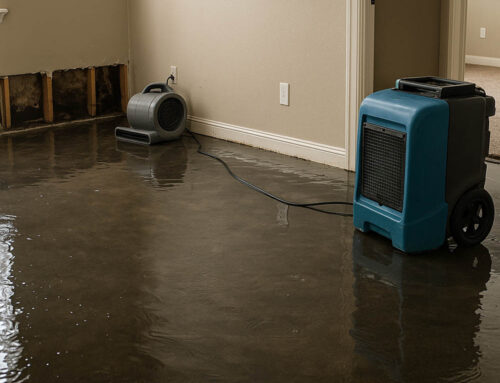
Addressing roof leaks in winter is especially complex. Frozen conditions make roofing repairs hazardous and sometimes delayable. That’s why interior water damage restoration becomes urgent. Once moisture enters the home, drying the structure thoroughly is a race against time. We use industrial air movers, dehumidifiers, and antimicrobial treatments to eliminate water, prevent mold, and safeguard the structure.
For commercial properties, roof leaks can disrupt business operations. Wet ceiling tiles, damaged inventory, and slippery floors pose liability risks. Whether it’s a multi-family housing unit or an office building, ignoring roof leaks in winter risks turning a minor repair into a full-scale restoration job.
Professional winter inspections help prevent all this. Our experts evaluate insulation levels, attic ventilation, and signs of prior leakage, offering proactive solutions like roof shoveling, heat cables, or attic air sealing. These preventative steps reduce the likelihood of ice dams, condensation, and heat loss—all of which protect your roof.
If your building has experienced a roof leak this winter, don’t delay professional water damage restoration. Fast action means smaller repairs, safer air, and lower restoration costs. Every moment counts when moisture is trapped inside structural elements.
Whether you’re managing a business facility or maintaining your home, early detection is your best defense against winter water damage.
Contact RestorePro at 1-800-847-0114 or visit our Facebook page to schedule a winter inspection or emergency response.
#RoofLeakDamage #WinterWaterDamage #MoldRiskPrevention