
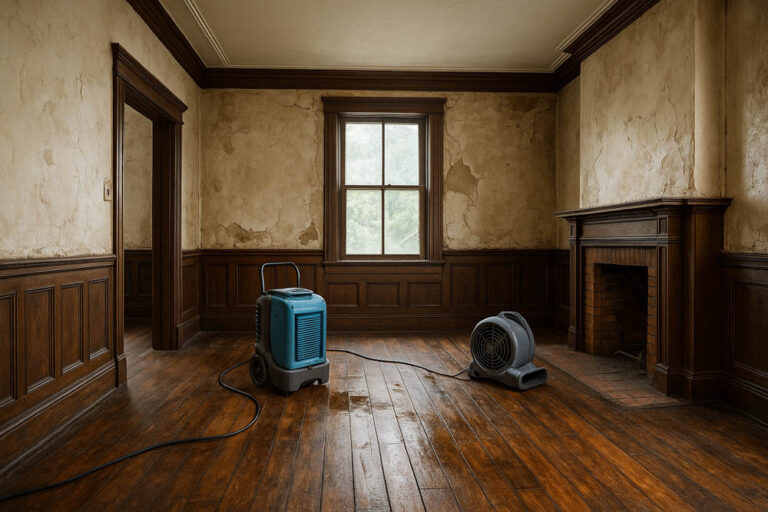
Historic homes and buildings are treasured for their character, craftsmanship, and unique architecture. But when water damage strikes—whether from burst pipes, roof leaks, or floods—restoring a historic structure requires far more than basic cleanup. These properties demand a specialized approach that respects their age, materials, and historical significance.
We’ve worked on many restoration projects involving historic properties across New England, and one thing is clear: water damage in these buildings presents unique challenges. Plaster walls, original woodwork, antique flooring, and outdated wiring systems react very differently to water exposure compared to modern construction. A generic restoration approach risks further damage and loss of historic value.
Time is critical in any water damage situation, but especially with older materials. Original hardwood floors can warp beyond repair if not dried properly. Plaster walls can crack or crumble. Handcrafted moldings and decorative features absorb moisture, swell, and separate. In many cases, the materials themselves are no longer manufactured, which makes preservation a priority.
One of the first steps we take is a comprehensive assessment of moisture penetration. Many historic homes were built without moisture barriers, so water can spread quickly through walls and substructures. We use thermal imaging and non-invasive moisture meters to pinpoint wet areas without damaging fragile finishes. This precision ensures that no hidden damage is overlooked while protecting irreplaceable features.
The drying process must also be carefully controlled. Using high-powered equipment too quickly can damage antique wood, plaster, and finishes. Instead, we apply gradual drying techniques that stabilize humidity levels, promote safe evaporation, and avoid cracking or warping. Every decision is based on the specific materials and construction methods used in the property.
Mold is a serious concern in older buildings. Many have poor ventilation, which allows moisture to linger in walls, crawl spaces, or behind decorative panels. We treat all water-damaged areas with professional-grade antimicrobial agents to prevent mold growth and preserve indoor air quality. When mold is already present, our certified remediation team uses containment methods that prevent contamination of surrounding historical elements.
In addition to the physical restoration, we work closely with homeowners, historical societies, and preservation boards to ensure that any repairs or replacements meet local regulations. This often means sourcing historically accurate materials or matching finishes that blend seamlessly with the original structure. It’s a delicate balance between restoration and preservation, and it requires both technical expertise and respect for the building’s story.
Insurance can be another complicated factor. Historic properties may have special coverage needs, and not all adjusters understand the real costs of proper restoration. We help clients navigate this process by providing detailed documentation, estimates, and timelines that reflect the unique demands of working with historical materials.
Ultimately, restoring a historic home after water damage isn’t just about fixing what’s broken—it’s about preserving a piece of history for future generations. We approach every project with a deep appreciation for craftsmanship and a commitment to doing things right.
If your historic property has suffered water damage, don’t trust it to a standard cleanup crew. Work with professionals who understand the art and science of restoration.
Contact RestorePro at 1-800-847-0114 or visit our Facebook page to schedule a specialized historic property assessment.
#HistoricHomeRestoration #WaterDamagePreservation #ExpertBuildingCare