
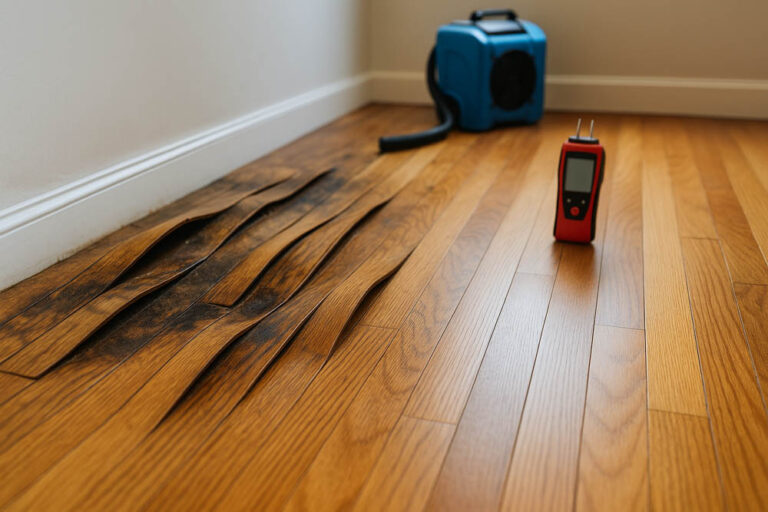
Hardwood floors bring warmth and beauty to any property, but when water damage occurs, they can quickly become a costly liability. Homeowners often wonder whether they can save their soaked flooring or if full replacement is the only option. Understanding the difference between salvageable and unsalvageable conditions is key—and that’s where professional insight matters most.
When water infiltrates hardwood floors, it doesn’t just sit on the surface. It seeps between planks, down to the subfloor, and into the layers beneath. The longer water is present, the more damage it causes. Common signs include cupping (when edges rise), buckling (when entire planks lift), crowning (when centers swell), and discoloration. While some of these issues can be reversed, others signal irreversible harm.
Our team evaluates three critical factors when determining whether floors can be restored: the source of the water, the duration of exposure, and the extent of damage. Clean water from a burst pipe may allow for drying and refinishing if caught early. However, gray water from dishwashers or black water from sewage backups means full replacement due to contamination risks.
Time is a major factor. The first 24–48 hours after water exposure are crucial. During this window, rapid water extraction and drying can save many floors. Industrial air movers and dehumidifiers are used to remove moisture from wood fibers. We often lift planks to dry the subfloor and prevent mold growth. If drying begins late, moisture can become trapped, leading to long-term warping or microbial growth.
Not all hardwood species react the same way to water. Solid hardwood tends to be more resilient than engineered wood, which has a plywood base that delaminates under moisture. Engineered floors with a thin wear layer may not survive sanding or refinishing, whereas thicker solid wood can sometimes be restored even after visible damage.
Mold is another major deciding factor. If water seeps into hidden areas beneath flooring and mold begins to grow, restoration becomes much more complex. Mold isn’t just a surface issue—it can root deep into porous wood, making complete removal difficult without full replacement. In these cases, safety and air quality must come first.
Some homeowners attempt DIY drying by running fans or opening windows, but this often isn’t enough. Professional drying uses moisture meters to monitor hidden saturation and adjust drying times. This precision ensures that subfloors, joists, and flooring materials are completely dry before any restoration work begins.
Refinishing hardwood floors may involve sanding, replacing select boards, and reapplying stain and sealant. This is only possible if the boards haven’t warped or separated beyond repair. Restoration may also be limited by aesthetic factors—mismatched patches or uneven finishes can reduce resale value and leave homeowners unsatisfied.
Full replacement, while more invasive and expensive, provides a fresh start with no hidden risks. It’s often the safest choice when water exposure is prolonged or contamination is involved. Our role is to help property owners make informed choices based on professional inspection and moisture testing.
Insurance coverage often hinges on whether professional restoration was attempted. We provide documentation, photographs, and estimates required for claims, and work directly with insurance adjusters to streamline the process.
In the end, every water damage case is unique. Our job is to evaluate the structural and sanitary condition of your floors and provide the best path forward—whether that means drying and refinishing or full replacement. Acting quickly always leads to better outcomes.
Contact RestorePro at 1-800-847-0114 or visit our Facebook page to schedule an inspection of your water-damaged flooring.
#HardwoodFloorRestoration #WaterDamageExperts #ReplaceOrRestore