
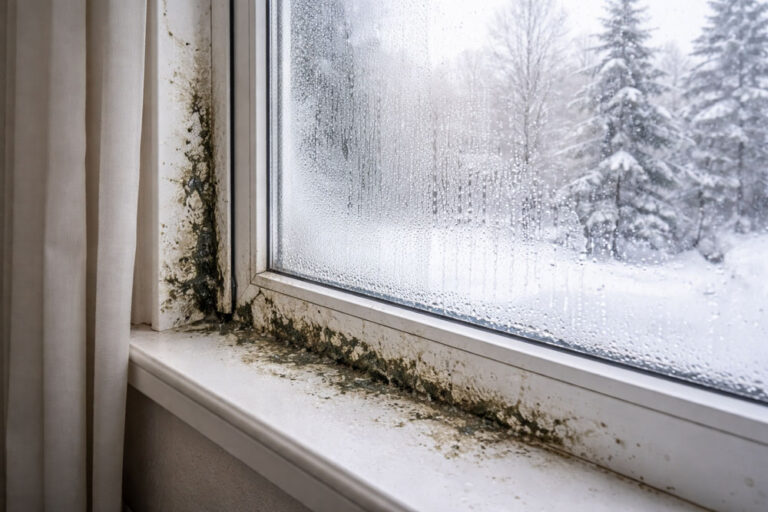
It’s a common misconception that mold only thrives in warm, humid months. But winter doesn’t stop mold—it just hides it. While cold outdoor air may slow mold’s growth rate, the conditions inside your home or commercial building during winter often create the perfect storm for mold development.
When we close up our buildings tightly to keep warm, we also trap moisture indoors. Activities like cooking, showering, and even breathing add humidity to the air. If ventilation is poor—as it often is in older homes or basements—this moisture has nowhere to escape. It settles on cold surfaces like windows, walls, and uninsulated pipes, creating the damp environments mold loves.
Another major winter culprit? Condensation. When warm indoor air meets cold surfaces, like single-pane windows or poorly insulated exterior walls, water droplets form. Over time, this continuous moisture buildup supports mold growth behind walls, in window frames, and around foundation joints.
Mold doesn’t go dormant indoors in the same way it might outdoors. In fact, many homes experience a spike in indoor air quality complaints during the colder months—persistent coughing, sneezing, and eye irritation that may be caused by hidden mold.
Attics and crawl spaces are especially vulnerable. Ice dams on the roof can trap moisture, which seeps into attic insulation and wood framing. If ventilation is lacking, the moisture lingers, creating a slow-growing mold problem that won’t be visible until staining or odor begins.
Basements are another concern. Groundwater seepage, humidifiers, or poorly sealed windows let moisture in. Because basements are typically cooler than the rest of the house, water tends to condense on surfaces and linger. Without a dry, well-ventilated environment, mold can take hold even during the coldest months.
And don’t forget your HVAC system. Warm air flowing through ducts can carry spores throughout your space. If there’s any moisture present in the system—perhaps from a leaky pipe or condensation in the ductwork—it becomes a distribution system for mold spores.
Addressing mold in winter requires a proactive approach. That means monitoring indoor humidity levels, improving insulation, ensuring proper ventilation, and inspecting areas known for moisture retention. If you see condensation, smell mustiness, or notice stains—even small ones—it’s time for a professional assessment.
DIY remedies like bleach sprays or dehumidifiers may offer short-term relief, but they don’t address the root cause or ensure thorough cleanup. Professional mold remediation is the only way to guarantee the mold is eliminated, the source is corrected, and the air is safe to breathe.
We offer full inspections, moisture mapping, and certified remediation services designed to address mold safely and permanently, no matter the season.
For more information on winter mold and health, visit EPA’s Mold Resources or CDC’s guidance on indoor moisture.
Contact RestorePro at 1-800-847-0114 or visit our Facebook page to schedule a winter mold assessment before it becomes a bigger problem.
#WinterMold #IndoorAirQuality #MoldRemediation