
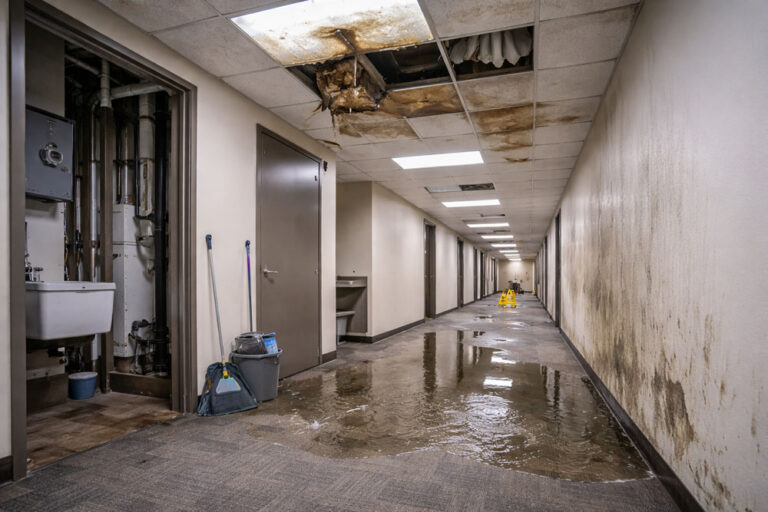
Commercial properties face unique challenges when it comes to water damage. Unlike residential spaces, these buildings often have complex plumbing systems, expansive HVAC networks, and high-traffic areas that make spotting problems more difficult. Unfortunately, what’s out of sight often stays out of mind—until it becomes a costly and disruptive emergency.
Facility managers are usually focused on daily operations, tenant satisfaction, and keeping systems running smoothly. But hidden water damage can quietly undermine all of that. Even small leaks from a rooftop unit, HVAC condensation line, or plumbing joint can soak insulation, damage wall assemblies, and create ideal environments for mold.
Ceiling tiles, for example, are often the first visual cue that something is wrong. Discoloration or sagging may signal a slow leak above—but what’s visible is only part of the picture. Above those tiles could be widespread moisture affecting wiring, ducts, and structural materials. Left untreated, this can result in mold contamination, odor issues, and even code violations.
Basements and utility rooms are other problem areas. These spaces often go unnoticed until an equipment failure or sump pump issue reveals standing water. And because many commercial facilities use slab-on-grade construction, water can wick up from underground sources without being immediately visible.
Another overlooked source? Roof drains. Flat commercial roofs rely on drainage systems to keep water from pooling. When those drains clog with debris, standing water can stress the roof membrane and eventually penetrate the structure. A single storm can push gallons of water into ceiling cavities and wall insulation—without a dramatic flood event ever occurring.
Elevator shafts, loading docks, and storage areas are also vulnerable. These are often minimally monitored and prone to moisture buildup from weather exposure or cleaning operations. The challenge isn’t just stopping the water—it’s finding it before the damage multiplies.
That’s where professional inspections and moisture mapping come into play. Using infrared cameras and moisture meters, we identify hidden issues without having to tear down walls or ceilings. Once detected, we implement a restoration plan tailored to commercial operations—minimizing disruption while eliminating moisture at its source.
Professional water damage restoration also ensures compliance. Building codes and health regulations require mold remediation and structural drying to meet specific standards. Unaddressed moisture can lead to complaints from tenants, liability issues, and increased insurance costs if it's not resolved properly.
If your facility has experienced even minor leaks, now is the time to act. Waiting until signs of mold or structural damage appear often means higher repair costs and longer downtime. Preventive action keeps your property safe, efficient, and compliant.
To learn more about commercial building maintenance and moisture control, visit CDC's guidance on damp buildings or NIOSH’s resources for building safety.
Contact RestorePro at 1-800-847-0114 or visit our Facebook page to schedule a professional water damage assessment for your commercial property.
#CommercialRestoration #WaterDamageDetection #FacilityManagement