
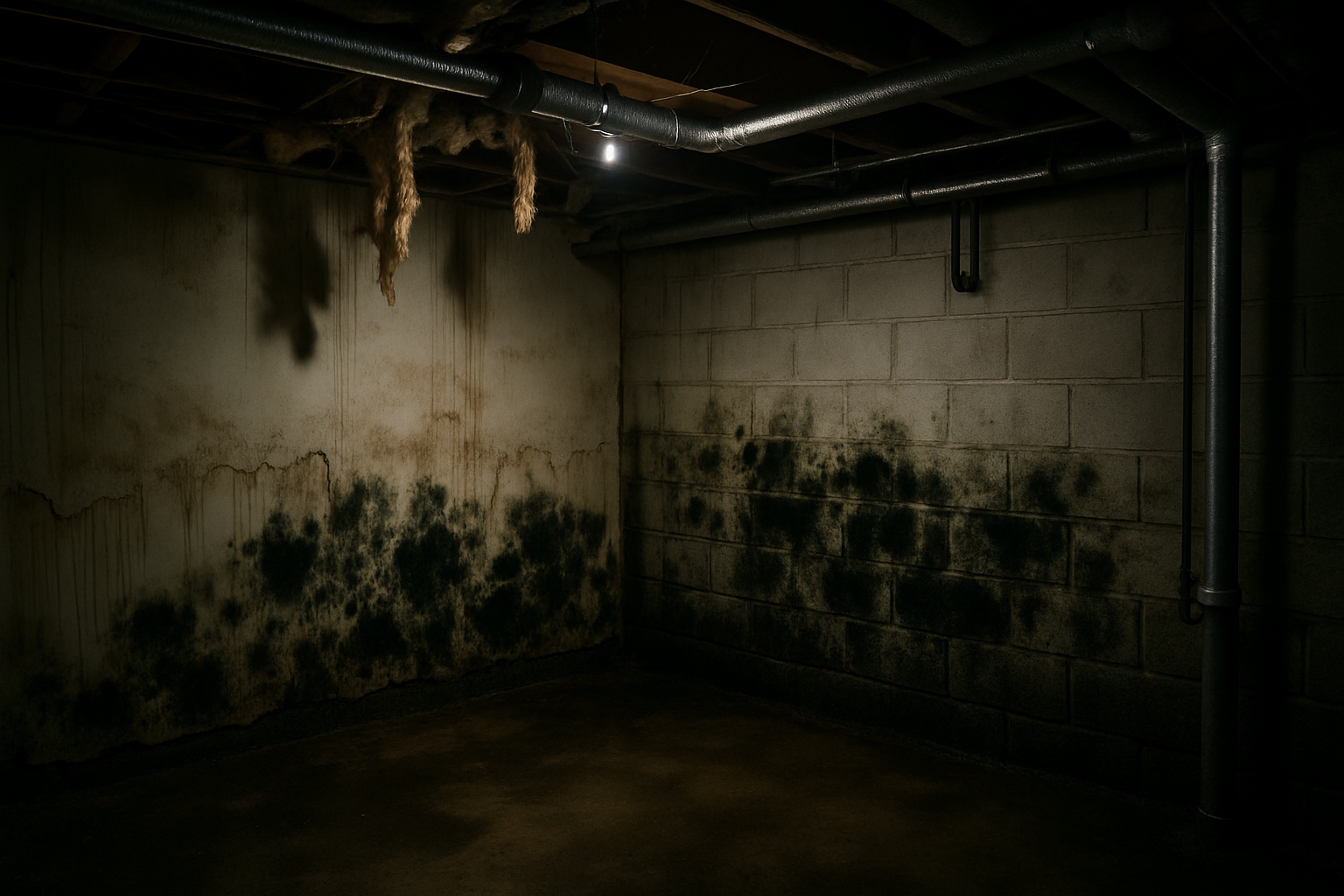
Mold after water damage is one of the fastest-moving threats a homeowner or property owner in New England will ever face — and summer makes it exponentially worse. If you've recently experienced a leak, a flooded basement, or any form of water intrusion, the clock is already ticking. Here at RestorePro Inc., our locally owned and operated team has been responding to water damage emergencies across Eastern Massachusetts and Southern New Hampshire since 1997, and we want you to understand exactly why summer conditions turn a manageable water problem into a serious mold crisis in a matter of days.
Mold spores are present in virtually every indoor and outdoor environment. Under normal conditions, they remain dormant, waiting for the right combination of moisture, warmth, and organic material to fuel their growth. Water damage provides all three in abundance. Wet drywall, soaked wood framing, saturated insulation, and damp carpet fibers are ideal food sources. When ambient temperatures climb into the 70s and 80s — which is precisely what we see throughout July and August across Massachusetts and New Hampshire — mold colonies can begin forming in as little as 24 to 48 hours after water exposure. That is not a worst-case scenario. That is a realistic outcome for any untreated water-damaged structure during a New England summer.
What makes summer particularly dangerous is the combination of heat and elevated outdoor humidity. In our region, July and August regularly bring humidity levels above 70 percent, and sometimes well above that during heat waves and coastal storm systems. When a home or commercial building has already been compromised by water intrusion, that outdoor humidity seeps in and compounds the existing moisture load. Basements, crawl spaces, and interior wall cavities that might dry out relatively quickly in October become persistently damp environments in July. Without professional-grade drying equipment and proper containment, the moisture simply has nowhere to go.
Mold also spreads in ways that are not always visible to the naked eye. A homeowner might wipe down a wet surface, assuming the problem is solved, while an active mold colony is already establishing itself inside the wall cavity or beneath the subfloor. By the time visible mold appears on a painted surface or tile grout line, the infestation has typically already penetrated deeper materials. This is one of the most important reasons we consistently emphasize that water damage in summer requires professional moisture mapping and remediation — not surface-level cleanup. Our team uses thermal imaging and calibrated moisture meters to identify exactly where water has migrated, including in areas that show no outward signs of damage.
The structural implications of unchecked mold growth are significant. Wood framing that remains wet and mold-affected will begin to lose structural integrity over time. Mold can compromise air quality throughout an entire building, not just in the room where water damage originally occurred, because HVAC systems and air movement spread spores rapidly through connected spaces. For commercial property owners, this creates liability and operational concerns on top of the physical damage itself.
Another factor our team sees repeatedly during summer months is the impact of air conditioning. Homeowners running central AC create a temperature differential between conditioned interior air and warm, humid exterior air, which can cause condensation to form inside wall assemblies and around improperly sealed penetrations. When this coincides with any existing water damage, the drying process is further complicated. Professional remediation accounts for these variables in ways that no consumer-grade fan or dehumidifier can effectively address.
If you've had any water damage in your home or commercial property this summer, we strongly encourage you to seek professional assessment immediately. As noted in our guide on what to expect during a professional mold remediation in your Massachusetts home, the process involves far more than simply drying surfaces — it requires systematic containment, treatment, and verification to ensure mold does not return. And if you're also dealing with the insurance side of a water damage event, our article on how RestorePro helps Massachusetts homeowners navigate insurance claims after water damage walks through how we support our clients through that process as well.
Mold after water damage does not wait, and in a New England summer, it moves faster than most people expect. The sooner professional drying and remediation begins, the better the outcome — for your property, your health, and your peace of mind.
RestorePro Inc. is a locally owned and operated restoration company serving Eastern Massachusetts and Southern New Hampshire since 1997. If you've experienced water damage and are concerned about mold growth, call us immediately at 1-800-847-0114 — we respond 24 hours a day, 7 days a week. You can also connect with us and see our latest updates on our Facebook page at http://facebook.com/RestorePro911. Don't let summer humidity turn a water problem into a mold disaster.
#MoldAfterWaterDamage #WaterDamageRestorationMA #MoldRemediationNewEngland #SummerMoldGrowth #RestoreProInc