
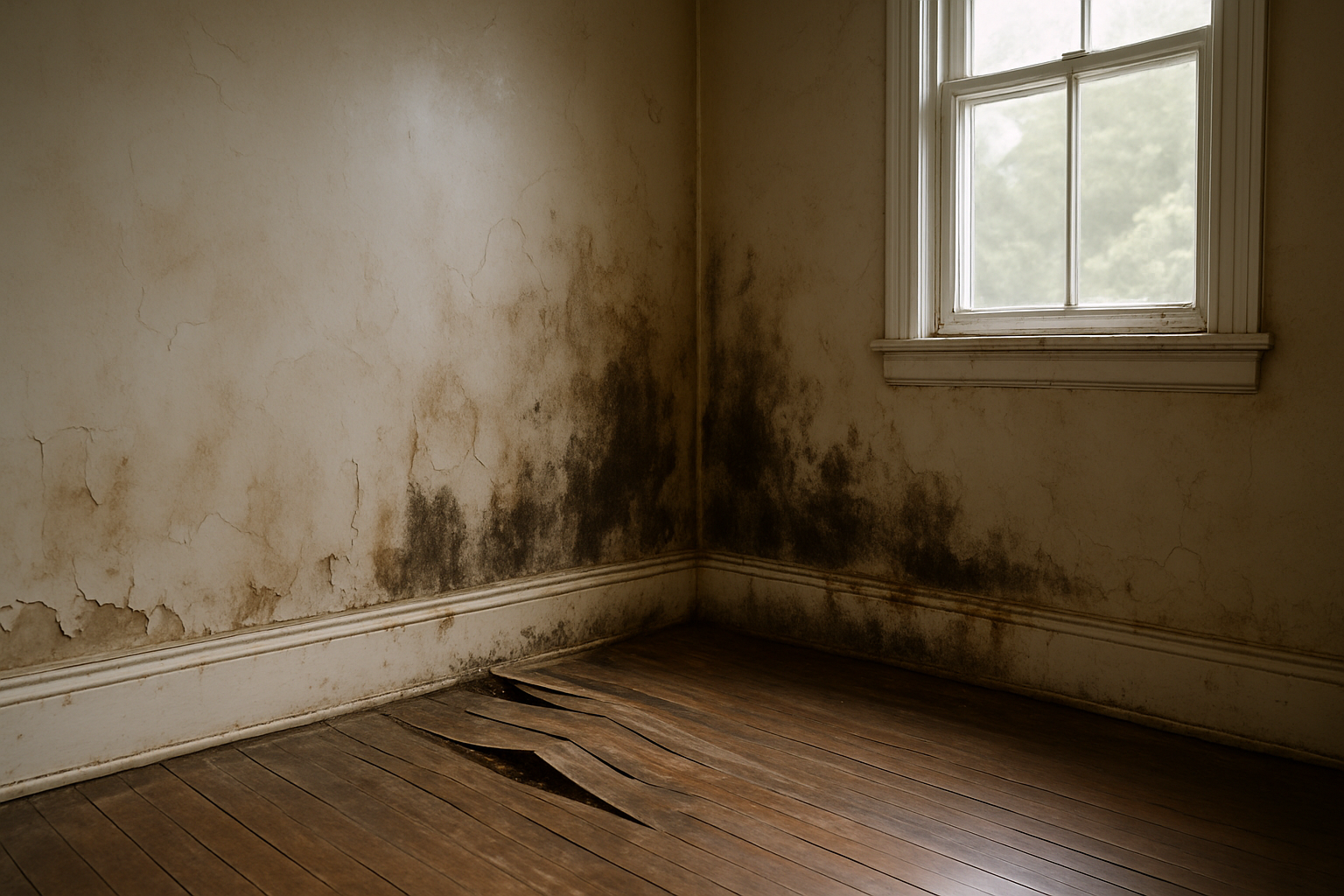
When water invades your home, the instinct to grab towels and fans and handle it yourself is completely understandable. But what looks like a successful cleanup on the surface is often anything but. DIY water damage cleanup is one of the leading causes of long-term mold problems we see in Massachusetts homes, and by the time homeowners call us, the situation is almost always far more serious than it needed to be. As a locally owned and operated restoration company serving Eastern Massachusetts and Southern New Hampshire since 1997, we've seen exactly how these situations unfold — and we want homeowners to understand why professional intervention from the very beginning makes all the difference.
The fundamental problem with DIY water damage cleanup is that what you can see is only a fraction of the moisture that's actually present. Water moves through building materials in ways that aren't visible to the naked eye. It wicks upward into drywall, travels laterally through subfloor sheathing, and saturates wall cavities and insulation long before any surface shows obvious signs of wetness. Homeowners using household fans, wet vacuums, and portable dehumidifiers from the hardware store may feel confident they've dried the area thoroughly, but those tools simply don't have the capacity to extract moisture from deep within structural materials. The water that stays hidden is the water that feeds mold.
Mold doesn't need much. Under the right conditions — and in New England, those conditions are almost always present — mold can begin colonizing damp materials within 24 to 48 hours of water exposure. Fall in Massachusetts brings its own complications: cooling overnight temperatures cause condensation inside walls, humidity levels fluctuate dramatically, and older homes with less air circulation are especially vulnerable. When water damage occurs in September or October and isn't dried properly, mold can establish itself deep inside wall cavities and beneath flooring before a homeowner ever notices a musty smell or visible discoloration.
One of the most common scenarios we respond to involves homeowners who experienced a water loss weeks or even months earlier, thought they'd handled it, and then began noticing persistent musty odors, worsening allergy symptoms, or visible mold growth on baseboards and walls. By that point, what might have been a straightforward drying and restoration job has become a full mold remediation. Contaminated drywall has to be removed, framing may need treatment, and in some cases flooring must come out entirely. The scope of work — and the disruption to the household — grows substantially when mold is allowed to establish itself.
Professional restoration teams like ours use industrial-grade moisture meters, thermal imaging cameras, and commercial drying equipment that penetrates and monitors moisture levels in structural assemblies, not just on the surface. We establish drying goals based on material baselines, track progress with daily monitoring, and document everything for your insurance carrier. This isn't something a rental dehumidifier and a few box fans can replicate. The science of structural drying is precise, and shortcuts — even well-intentioned ones — leave moisture behind. Our article on how dehumidification and air drying equipment stops mold growth after water damage explains in detail why professional-grade equipment is the only reliable solution.
The financial argument for professional water damage cleanup is also compelling. Homeowners often hesitate because they assume handling it themselves will save money. In reality, a failed DIY cleanup that results in mold remediation costs far more than the original professional restoration would have. Insurance policies may also limit coverage when improper mitigation contributed to secondary damage, leaving homeowners responsible for a larger share of the repair bill.
We also want homeowners to understand that mold resulting from water damage isn't just a structural issue — it's a health concern. Mold spores released into the air can aggravate asthma, trigger respiratory symptoms, and pose particular risks to children, elderly residents, and anyone with immune sensitivities. For commercial property owners dealing with similar concerns, annual mold inspections are an important preventive step that we strongly recommend.
If your home has experienced any amount of water intrusion — whether from a leaking roof, a burst pipe, an appliance failure, or a flooded basement — the safest and most cost-effective decision you can make is to contact a professional restoration team immediately. Don't wait to see if it dries on its own. Don't assume fans will be enough. The hidden moisture left behind by DIY water damage cleanup is exactly where long-term mold problems begin, and we've spent nearly three decades helping Massachusetts and New Hampshire homeowners undo the consequences.
RestorePro Inc. is locally owned and operated out of Woburn, Massachusetts, and we're available 24 hours a day, seven days a week to respond to water damage emergencies throughout Eastern Massachusetts and Southern New Hampshire. Call us at 1-800-847-0114 the moment water damage occurs — don't give mold a chance to get started. You can also connect with our team and follow restoration tips and updates on our Facebook page at http://facebook.com/RestorePro911.
#WaterDamageCleanup #MoldPreventionMassachusetts #DIYWaterDamage #MoldRemediationMA #RestorationExperts