
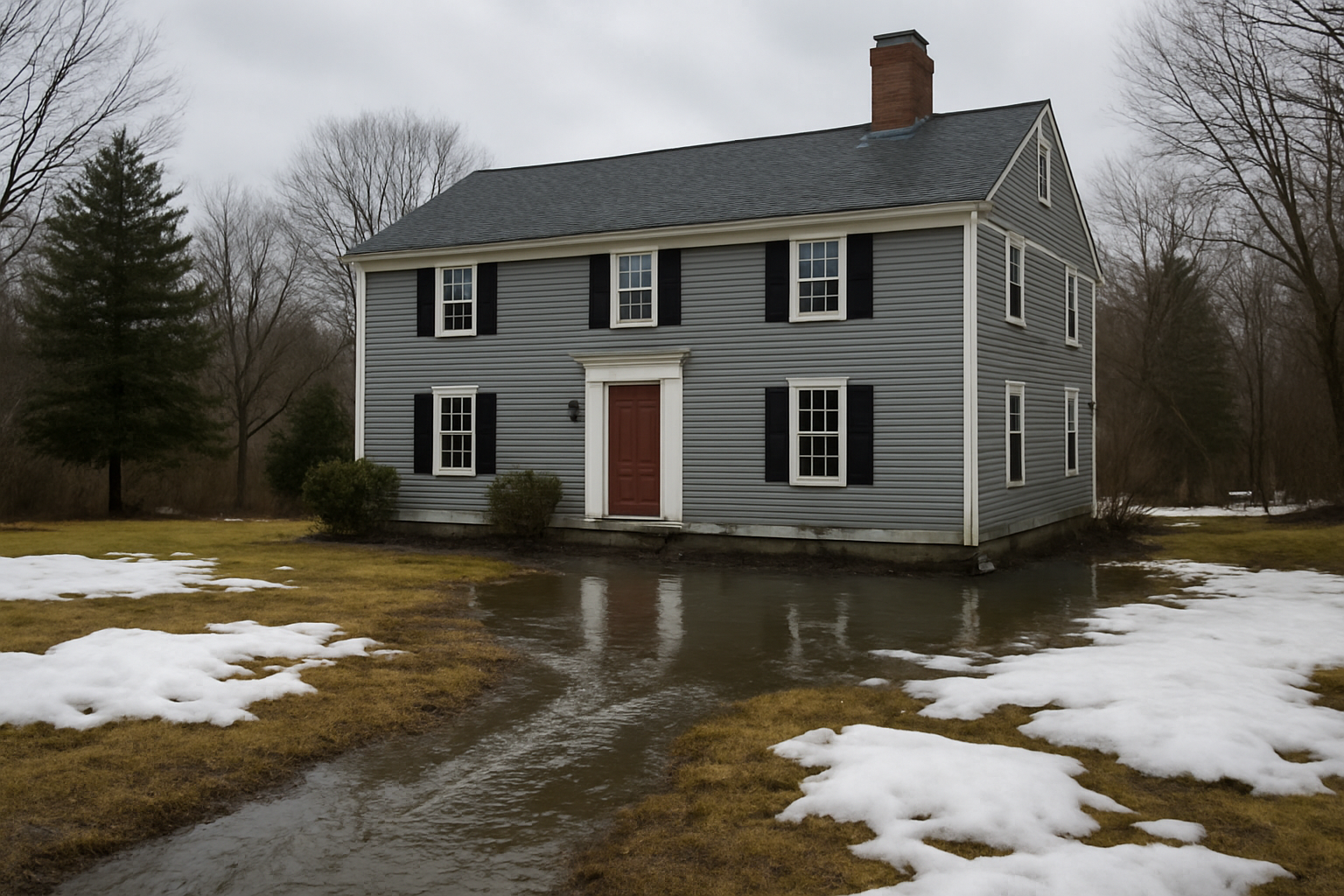
Spring thaw basement flooding is one of the most damaging and underestimated threats facing Massachusetts homeowners every year. As temperatures rise across Eastern Massachusetts and Southern New Hampshire in May, snow and ice that accumulated over months of winter weather begins melting rapidly — and that water has to go somewhere. When the ground is still partially frozen and unable to absorb moisture quickly enough, the path of least resistance is often directly into your basement. At RestorePro Inc., we have been responding to spring flooding emergencies across this region since 1997, and we want homeowners to understand what they can do now to reduce their risk before the water finds its way inside.
The science behind spring thaw basement flooding is straightforward but serious. Frozen ground acts almost like a layer of concrete, preventing meltwater from percolating downward. When a warm spell hits after a heavy snow year — which Eastern Massachusetts frequently experiences — enormous volumes of water accumulate at the surface with nowhere to drain. That water migrates toward the lowest points of your property, and your basement foundation walls and floor become the primary barrier between your living space and thousands of gallons of standing water. Understanding this dynamic is the first step toward meaningful prevention.
One of the most important protective measures any homeowner can take is ensuring that their sump pump is in proper working order before the thaw fully arrives. A sump pump that fails during peak melt season can allow water levels to rise several inches per hour in a compromised basement. We strongly recommend having a licensed professional inspect and service your sump pump before spring storms compound the problem. This means testing the float mechanism, verifying the discharge line is clear and directing water well away from the foundation, and confirming that a battery backup system is in place for the inevitable power outages that accompany spring storms in Massachusetts.
Grading and drainage around your home's perimeter deserve equal attention. Over years of freeze-thaw cycles, soil around foundation walls can shift and settle in ways that cause water to flow toward your home rather than away from it. Downspout extensions are a simple but critical factor as well — downspouts that terminate too close to the foundation are a leading contributor to hydrostatic pressure buildup against basement walls. These are conditions a professional inspector can evaluate during a pre-season walkthrough, and addressing them before the ground saturates can make a significant difference in how your basement performs through the spring season.
Window wells are another frequently overlooked vulnerability. Basement egress windows and older single-pane window wells can allow substantial water intrusion during spring flooding events, especially when debris accumulation prevents drainage. The same is true of older basement door frames and bulkhead entries, which often lack adequate sealing for high-moisture conditions. When meltwater finds these entry points, the result is rarely just a wet floor — it is often soaked framing, saturated insulation, and the beginning of a mold problem that develops silently over the following weeks. If you have already experienced a flooding event this spring, we encourage you to read our detailed guidance on what homeowners in Eastern Massachusetts should do immediately after a basement flood.
Foundation wall cracks are perhaps the most serious structural risk factor for spring thaw basement flooding. Even hairline cracks allow water to penetrate under hydrostatic pressure, and over multiple seasons those cracks widen. Interior waterproofing systems and exterior excavation and membrane applications are professional-grade solutions that provide lasting protection — not temporary fixes. These are not projects that should be approached as do-it-yourself efforts, as improper installation can actually worsen water intrusion or create new drainage problems elsewhere on the property.
It is also worth noting that spring thaw flooding often introduces contaminants into basement water that are not visible to the eye. Saturated soil carries lawn chemicals, animal waste, and microbial matter that can create health hazards when water sits on basement floors and walls. The moisture that remains after a flooding event — even when the visible water is removed — creates ideal conditions for mold growth within 24 to 48 hours. This is why a professional remediation response is always more protective than simply running a shop vacuum and hoping for the best. As our team has documented extensively, mold remediation protects the long-term value of your property in ways that go far beyond what surface cleaning can achieve.
Spring is a season of urgency for Massachusetts homeowners who know their basement has vulnerabilities. The window between the first significant melt and peak saturation of the ground is narrow, and the damage that occurs during that window can affect your property's structural integrity, air quality, and market value for years to come. As a locally owned and operated restoration company serving Eastern Massachusetts and Southern New Hampshire since 1997, we have seen firsthand what proactive protection can prevent — and what delayed response costs homeowners in the long run.
If you are concerned about spring thaw basement flooding or if water has already entered your home this season, contact RestorePro Inc. now at 1-800-847-0114 for immediate professional assessment and response. You can also follow us on Facebook at http://facebook.com/RestorePro911 for seasonal tips, local updates, and storm alerts relevant to our region.
#SpringThawFlooding #BasementFloodingMassachusetts #WaterDamageRestoration #SpringHomeProtection #MassachusettsHomeowners